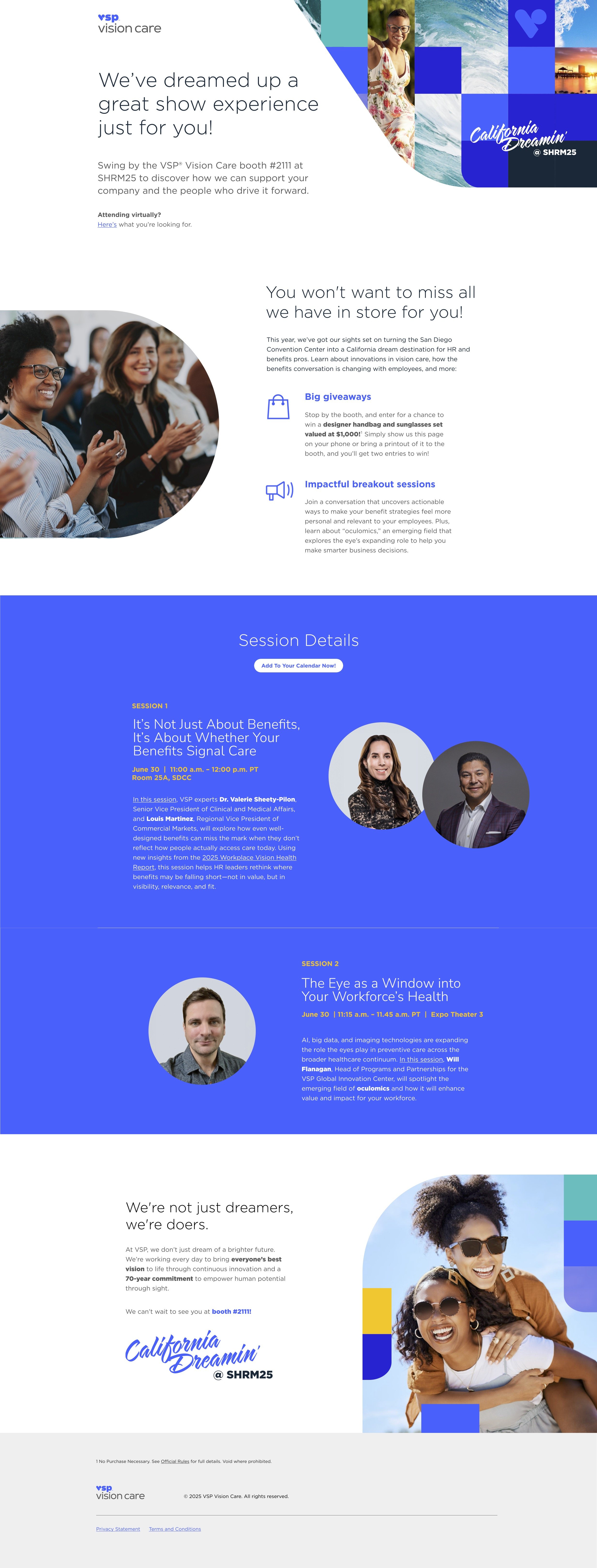
Vsp Vision Care | SHRM 2025
VSP Vision Care asked our team to concept and script a 60-minute SHRM conference presentation that would stand out from the typical compliance- or product-focused talks HR leaders expect. The goal was to bring new energy to an often-overlooked benefit (vision care) by positioning it as a strategic lever for workforce well-being, behavior change, and retention.
We needed to:
Show relevance to today's employee experience
Spotlight underutilized data from the 2025 Vision Health Report
Bridge emotional resonance with enterprise credibility
Support two expert speakers with differing styles
Give HR leaders something worth talking about (and acting on)
My role
I led messaging strategy and copy development from early concept to client-ready scripts. This included:
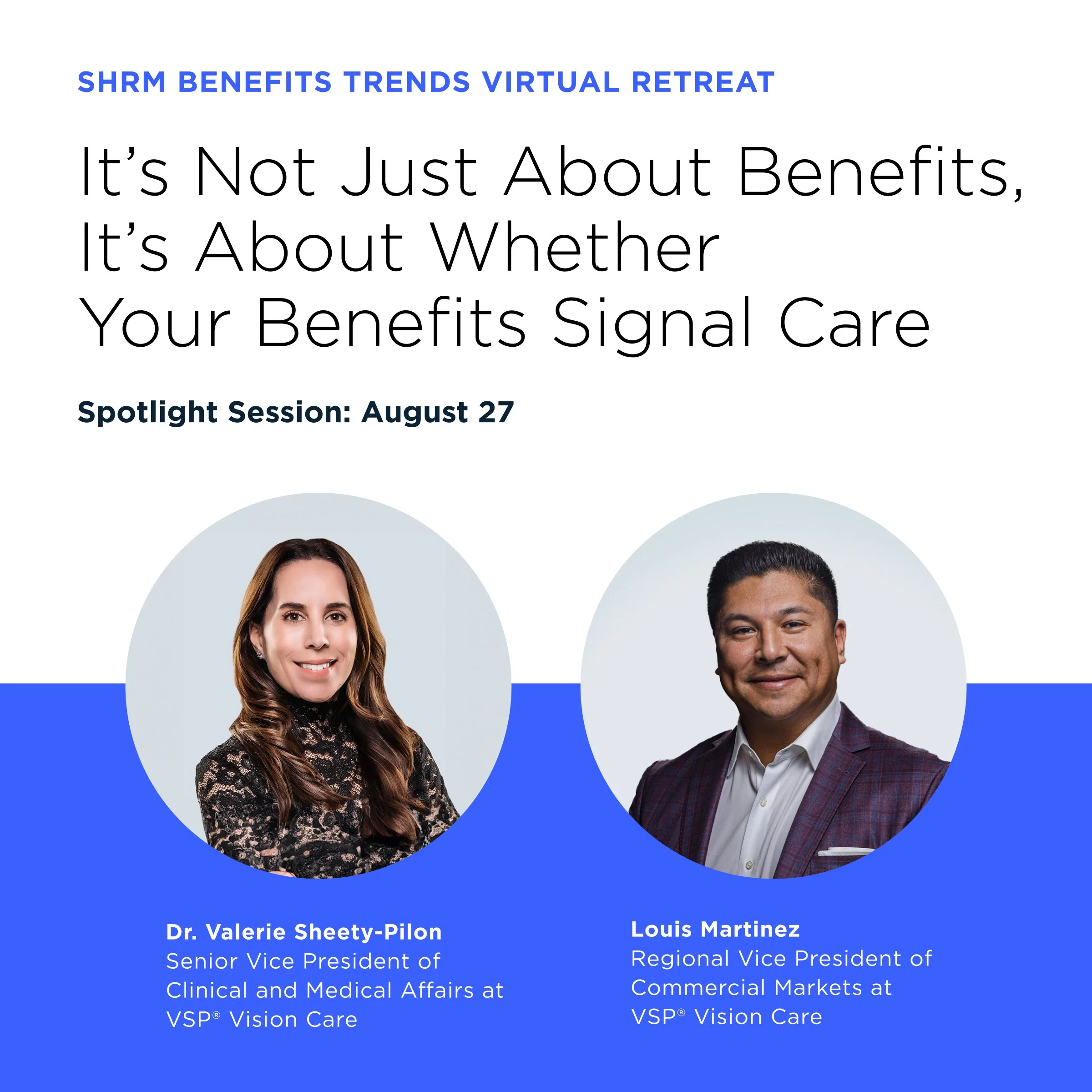
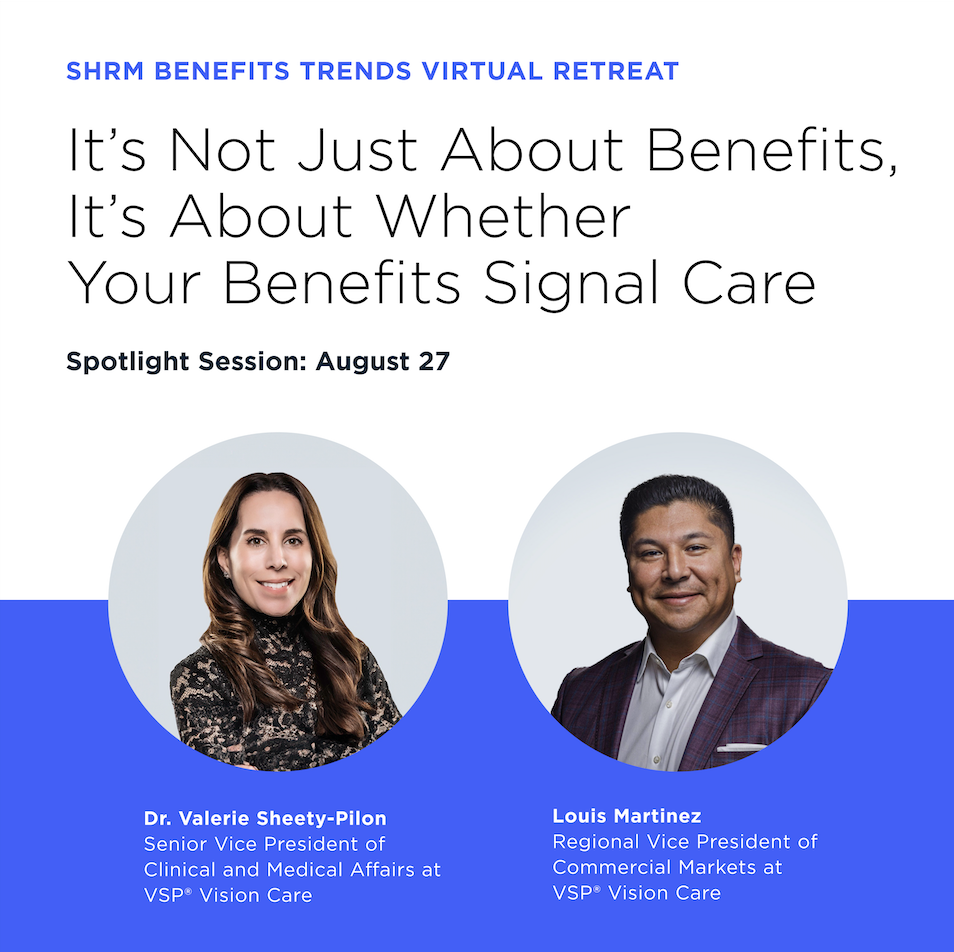
Collaborating with medical, regional, and marketing stakeholders (Dr. Valerie Sheety-Pilon and Louis Martinez) to shape tone, voice, and speaker flow
Reframing eye care not as a “benefit checkbox” but a proxy for access, engagement, and missed opportunity
Writing flexible fireside-style talk tracks grounded in behavior, not product
Developing an interactive live-poll engagement and small-group prompt designed to make a tired audience feel seen—not lectured
Iterating in real time with brand marketing, medical leads, and SHRM alignment teams
The outcome
We landed on a sharp, emotionally intelligent narrative titled:
“It’s Not Just About Benefits, It’s About Whether Your Benefits Signal Care.”
The story reframed low vision benefit utilization not as apathy or distrust—but as a misalignment between benefit design and real-life behavior. Through data, anecdotes, and a live audience poll, we helped HR leaders rethink what their benefits are actually signaling—before disengagement shows up in turnover or missed diagnoses.
Strategic framing, business fluency, and emotional resonance made this talk stand out. It connected abstract workforce issues (like burnout, AI self-diagnosis, skipped preventive care) to something tangible and addressable—vision benefits—without selling a plan. Just showing how small design shifts can reignite engagement and trust.